

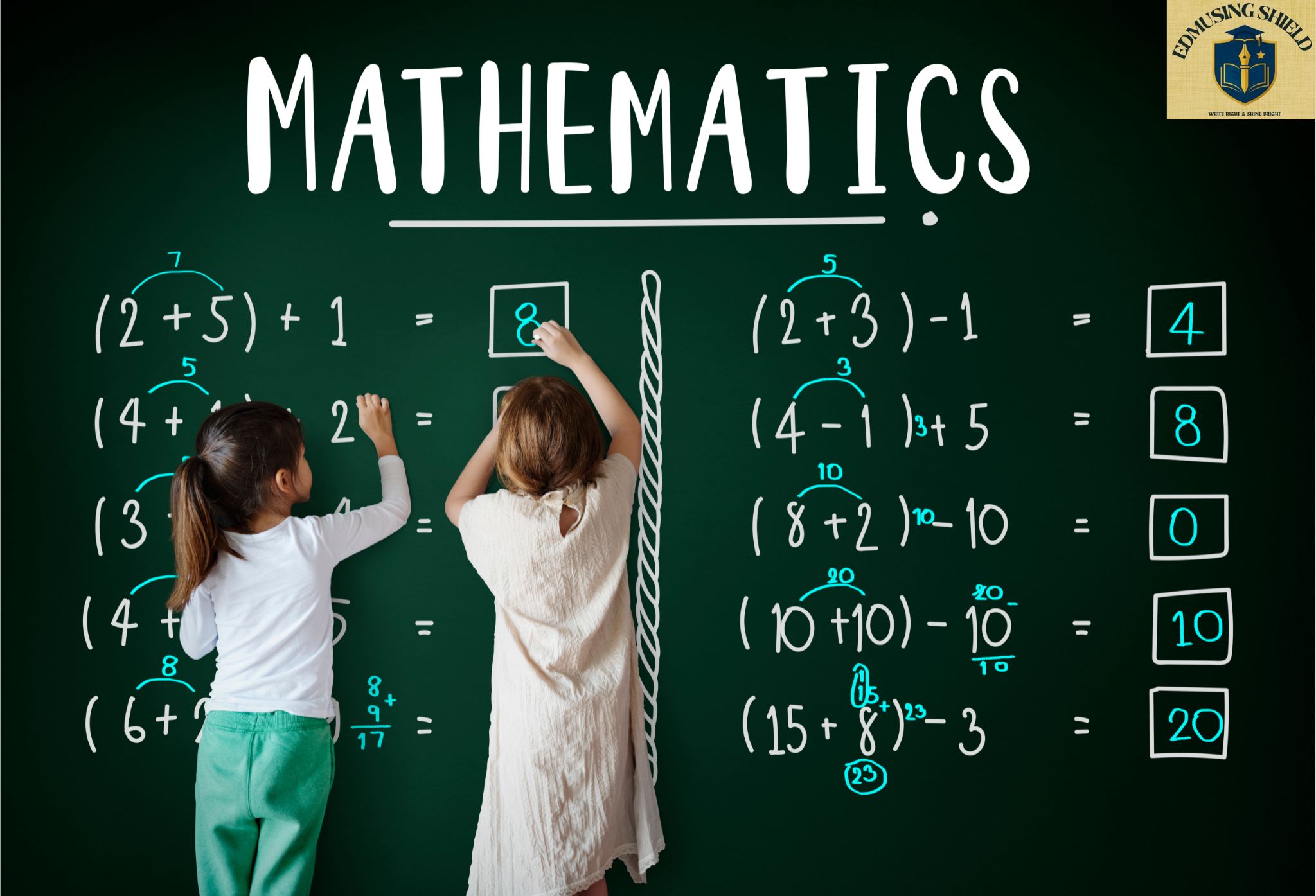
Mathematics is often seen as the most feared subject in school corridors. Yet, under India’s evolving education framework and the National Education Policy (NEP 2020), maths is no longer meant to be memorized; it is meant to be understood, experienced, and applied.
If students struggle with formulas, numbers, or problem-solving, the issue is rarely ability. More often, it is about method, mindset, and teaching approach.
Let’s explore how mathematics can become easier, engaging, and meaningful.
Why Students Find Mathematics Difficult
Before solving the problem, we must understand it.
Students typically struggle because:
- Concepts are introduced without a real-life context
- Focus remains on memorizing formulas instead of understanding logic
- Fear of mistakes discourages practice
- Learning gaps accumulate over time
- Teaching methods emphasize speed over comprehension
Modern education encourages conceptual clarity over rote learning, making it essential to change how maths is approached.
1. Build Conceptual Understanding, Not Memorization
Mathematics becomes easier when students understand why a formula works rather than memorizing it.
For example:
- Instead of memorizing area formulas, understand how shapes are constructed
- Instead of learning multiplication tables mechanically, explore patterns
When concepts are clear, students can solve unfamiliar problems confidently.
NEP Focus: Concept-based learning & critical thinking
2. Connect Mathematics to Real Life
Students engage more when maths feels relevant.
Everyday applications include:
- Calculating discounts while shopping
- Measuring ingredients while cooking
- Understanding time, distance, and speed in travel
- Managing savings and budgeting
When maths connects to daily life, it shifts from abstract numbers to practical skills.
3. Encourage Visual & Activity-Based Learning
Visual learning helps students grasp abstract ideas faster.
Effective methods include:
- Using diagrams and number lines
- Learning fractions with everyday objects
- Exploring geometry using paper folding
- Practicing mental maths through games
Activity-based learning builds curiosity and improves retention.
NEP Focus: Experiential & activity-based education
4. Remove the Fear of Mistakes
Fear is one of the biggest barriers to learning mathematics.
Students should be encouraged to:
- Attempt problems without fear of being wrong
- Learn from errors rather than avoid them
- Ask questions freely
Mistakes are not failures; they are stepping stones to mastery.
5. Strengthen the Basics First
Many students struggle because foundational concepts remain weak.
Focus on:
- Number sense
- Basic operations
- Fractions and decimals
- Place value understanding
A strong foundation makes advanced topics significantly easier.
6. Use Technology & Interactive Tools
Today’s learners respond well to digital tools.
Helpful options include:
- Interactive math apps
- Concept videos and visual explanations
- Online quizzes for instant feedback
- Gamified learning platforms
Technology enhances engagement and makes practice enjoyable.
NEP Focus: Digital learning integration
7. Practice Smart, Not Just More
Repetition alone does not improve skills.
Effective practice includes:
- Solving varied problem types
- Applying concepts to real situations
- Reviewing mistakes to understand patterns
- Short daily practice instead of long sessions
Consistency builds confidence and speed.
8. Encourage a Growth Mindset Toward Mathematics
Students often say, “I am not good at maths.” This belief becomes a barrier.
Replace it with:
✔ “I can improve with practice.”
✔ “Mistakes help me learn.”
✔ “Understanding is more important than speed.”
A positive mindset transforms performance.
Role of Parents & Educators
Making mathematics easier requires collaboration.
Parents can:
- Avoid transferring their own math anxiety
- Encourage curiosity and problem-solving
- Praise effort rather than marks
Educators can:
- Focus on conceptual clarity
- Encourage discussion and questioning
- Provide real-life examples and applications
Final Thoughts
Mathematics is not inherently difficult; it becomes difficult when taught without context, clarity, or engagement.
By aligning learning with conceptual understanding, real-life relevance, experiential methods, and NEP 2020 principles, mathematics can transform from a feared subject into a powerful life skill.
When students begin to see maths in the world around them, confidence grows, and fear disappears.
Follow Us: www.edmusingshield.com